Whether you want to brighten up a dull wall, create a focal point, or bring a touch of nature indoors, a plant wall offers a versatile solution. You can use repurposed wooden pallets, upcycled bottles, or even fabric pocket planters to achieve a stunning effect without breaking the bank. Each option presents unique possibilities, but the real question is—how can you combine these ideas to suit your personal style and space? Explore the potential of these low-cost plant wall ideas and see how they can transform your environment.
Key Elements
- Utilize repurposed wooden pallets for a budget-friendly vertical garden, ensuring proper cleaning and drainage for plants.
- Create DIY hanging planters from upcycled bottles and jars for a unique and colorful display.
- Install vertical garden frames made from reclaimed wood or metal grids to enhance aesthetic appeal and plant organization.
- Use fabric pocket planters for efficient wall space utilization, allowing for a variety of trailing vines and herbs.
- Incorporate wall-mounted shelves to showcase plants at different heights, adding depth and visual interest to your space.
Repurposed Wooden Pallets
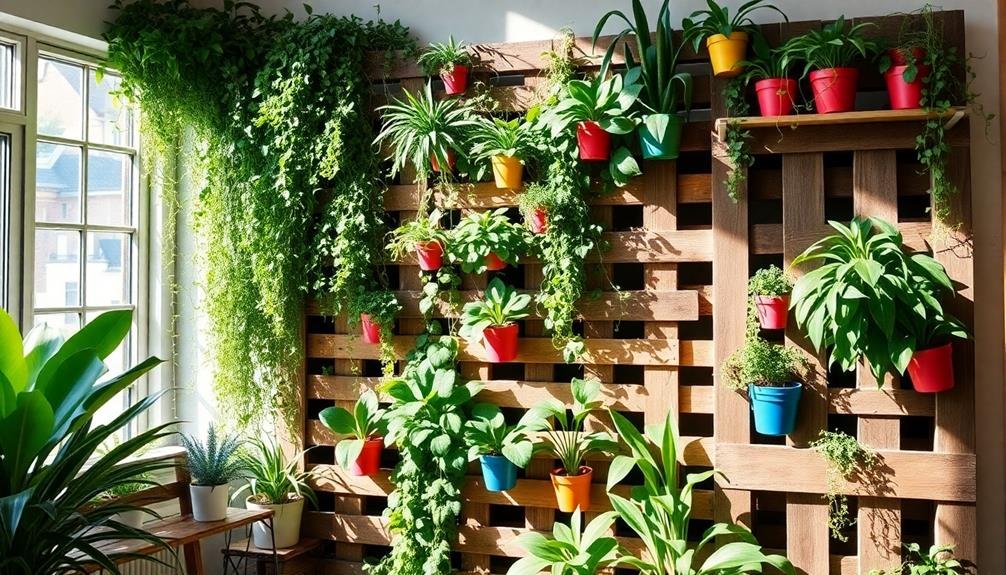
Repurposed wooden pallets are often a fantastic choice for creating an eye-catching plant wall on a budget. You can easily transform these sturdy structures into a striking display, allowing you to showcase your favorite plants while adding character to your space.
Start by sourcing pallets from local businesses or online marketplaces; many places often give them away for free. Thrift stores are also great places to find unique items that can enhance your decor, providing cost-effective options and unique decor items for your project.
Once you've acquired your pallets, give them a thorough cleaning and a light sanding to remove any rough edges or splinters. You might want to paint or stain the wood to match your aesthetic, ensuring it complements your home's decor.
After that, you can attach landscape fabric to the back of the pallet, which will hold the soil in place and allow for drainage.
Next, fill each slat with potting soil and choose a variety of plants that thrive in vertical spaces, such as succulents, ferns, or herbs. This not only creates a vibrant living wall but also fosters a sense of community among those who appreciate gardening.
As you nurture your plants, you'll find joy in their growth, making your space feel welcoming and alive.
Vertical Garden Frames
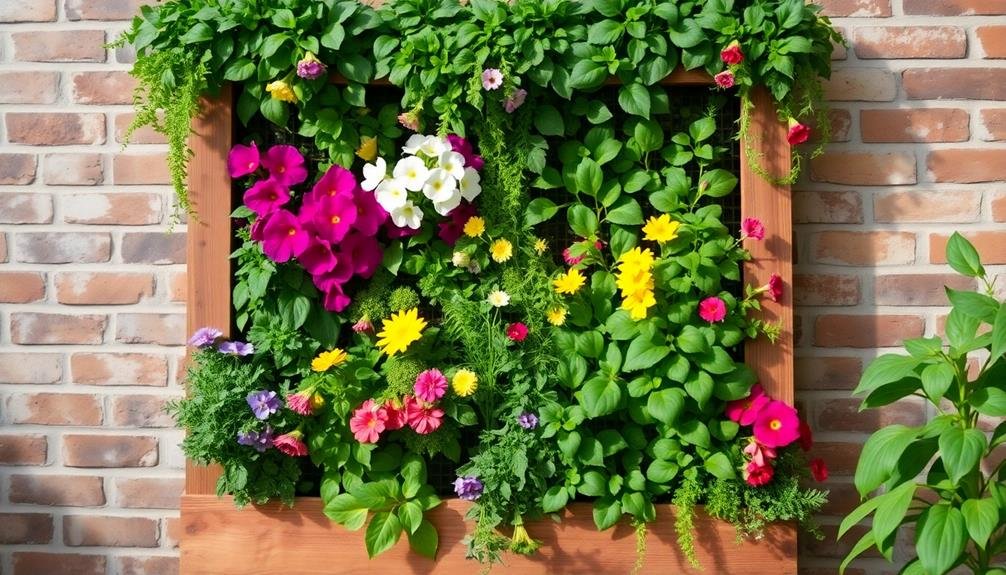
When creating a vertical garden frame, you'll find that selecting the right DIY options can transform your space while staying budget-friendly.
Consider various materials, such as reclaimed wood or metal grids, which not only support plant growth but also enhance the aesthetic appeal of your garden.
Additionally, strategizing plant placement is essential; by considering factors like sunlight exposure and plant compatibility, you can cultivate a thriving vertical oasis that stands out in any setting.
DIY Frame Options
Creating your own vertical garden frames can be a rewarding way to enhance your space without spending a fortune. By crafting a personalized frame, you not only display your plants but also create a unique focal point that reflects your style. Consider these DIY frame options:
| Frame Type | Description |
|---|---|
| Wooden Pallet | Repurpose a wooden pallet for a rustic look, allowing ample space for various plants. |
| Wire Mesh | Use wire mesh stretched across a frame to suspend small pots, promoting an airy feel. |
| Old Window Frame | Upcycle an old window frame, adding a touch of vintage charm while providing a sturdy base. |
| PVC Pipe Frame | Construct a lightweight, durable frame with PVC pipes, ideal for indoor or outdoor use. |
| Fabric Pocket Planter | Sew pockets onto a sturdy fabric, creating a portable, soft-frame option for herbs or flowers. |
Each option allows you to express your creativity while fostering a sense of community, as you can easily share your gardening journey with friends and family. A vertical garden frame not only beautifies your surroundings but also connects you to the nurturing aspect of plant care, cultivating a sense of belonging in your home.
Material Selection Tips
Choosing the right materials for your vertical garden frame can make all the difference in its durability and aesthetic appeal. When selecting materials, consider both the weight and the weather resistance, as these factors greatly influence longevity.
For a sturdy option, treated wood is often favored; it offers a natural look while withstanding outdoor conditions. However, if you prefer a lightweight alternative, consider aluminum or PVC, which are resistant to rust and corrosion, guaranteeing your garden remains vibrant season after season.
Additionally, think about the planting medium you'll use; incorporating a breathable fabric or mesh can promote healthy root growth, while also facilitating drainage.
To enhance visual interest, explore painted or stained finishes that coordinate with your home's exterior, creating a seamless integration into your space. You might also look into repurposed materials, such as old pallets or crates, which not only provide a unique charm but also contribute to sustainability.
Lastly, don't overlook the importance of sturdy mounting hardware; it guarantees the frame remains securely in place, allowing your plants to flourish without fear of collapse.
Plant Placement Strategies
Strategically placing your plants in a vertical garden can dramatically enhance both its beauty and functionality. To create a cohesive look, consider grouping plants with similar light and water requirements. For instance, you might place sun-loving succulents at the top of your frame, while shade-tolerant ferns can occupy the lower sections, allowing you to maximize the health and vibrancy of each plant.
Additionally, think about the visual impact of color and texture. You can mix vibrant flowering plants with lush greenery, creating a layered effect that draws the eye. Utilizing trailing plants, like pothos or string of pearls, can also add depth, as they cascade down the sides, softening the overall appearance of your vertical garden.
Don't forget to incorporate varying heights to create interest; taller plants can serve as focal points, while smaller varieties fill in gaps.
Hanging Planter Systems
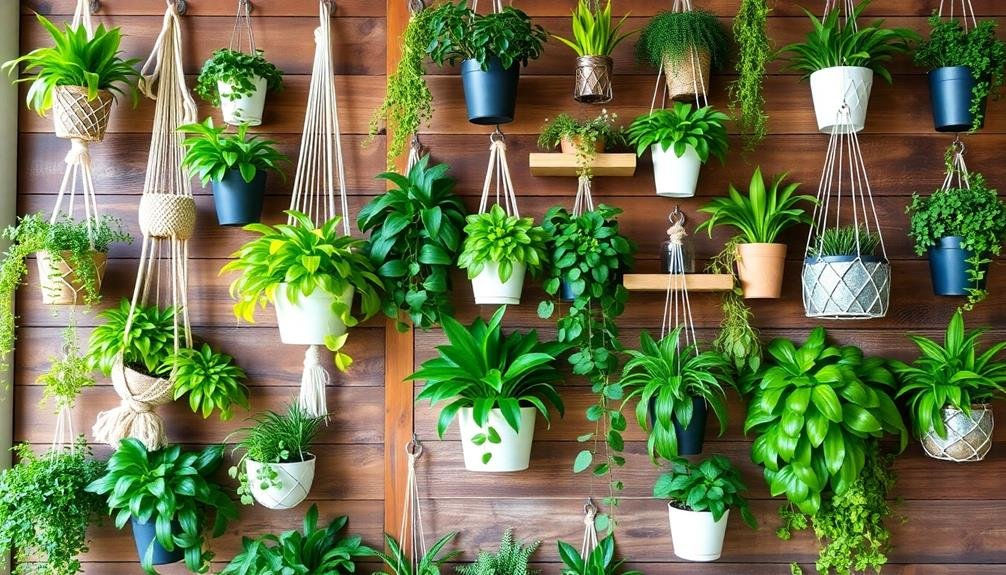
When it comes to enhancing your space with hanging planter systems, you've got some exciting options to explore.
DIY hanging planters can be a fun and cost-effective way to showcase your favorite plants, while vertical garden kits provide a more structured approach for those looking for simplicity and ease of installation.
Additionally, utilizing recycled materials not only promotes sustainability but also allows you to create unique and personalized planters that reflect your style.
DIY Hanging Planters
Creating your own DIY hanging planters is a fantastic way to add greenery to your space without breaking the bank. These planters not only enhance the aesthetic of your home but also foster a sense of belonging as you cultivate your indoor garden.
To start, gather materials like macramé cord, wooden dowels, or repurposed containers, which can be easily found at local craft stores or even around your home.
Consider using terracotta pots, as they offer a rustic charm and excellent drainage for your plants. You can create various designs, from simple knotting techniques to intricate macramé patterns that showcase your creativity.
To guarantee stability, securely attach your planters to the wall or ceiling using hooks, allowing you to maximize vertical space and achieve an eye-catching display.
For a cohesive look, choose a color palette that complements your existing decor, perhaps incorporating plants like trailing pothos or vibrant succulents.
Don't forget to maintain your hanging planters with regular watering and proper sunlight exposure, ensuring your indoor oasis thrives.
Vertical Garden Kits
Vertical garden kits offer a convenient and stylish solution for transforming your walls into lush green spaces.
These kits come complete with everything you need to create a vibrant vertical garden, making it easy to infuse life into any indoor or outdoor area. By utilizing these systems, you can cultivate a variety of plants, enhancing both aesthetic appeal and air quality.
Here are three compelling benefits of vertical garden kits:
- Space Efficiency: Perfect for small spaces, these kits allow you to maximize your gardening potential without requiring extensive floor space.
- Customization Options: Most kits offer modular designs, enabling you to mix and match various plant types and colors to reflect your unique style and personality.
- Easy Maintenance: Many vertical garden kits come with self-watering systems, which greatly reduce the time and effort needed for upkeep.
As you explore these options, consider how a vertical garden can connect you with nature, while also fostering a sense of community among fellow plant enthusiasts.
Recycled Materials Solutions
Transforming everyday items into hanging planters not only adds charm to your walls but also promotes sustainability. By repurposing materials you already own, you can create unique planter systems that reflect your personality while benefiting the environment. Consider using old tin cans, plastic bottles, or wooden pallets to cultivate a verdant display in your home.
Here's a simple guide to inspire your creativity:
| Material | Usage Ideas |
|---|---|
| Tin Cans | Paint them and hang with twine |
| Plastic Bottles | Cut in half, attach to a wall |
| Wooden Pallets | Fill gaps with potted plants |
| Old Shoe Organizers | Use pockets for smaller plants |
| Colanders | Hang for a vintage look with drainage |
These solutions not only foster a sense of belonging to the eco-friendly community but also encourage you to engage with nature in an artistic manner. By incorporating these recycled materials, you can craft a personal space that speaks to your values and showcases your style, all while nurturing your plants.
Upcycled Bottles and Jars
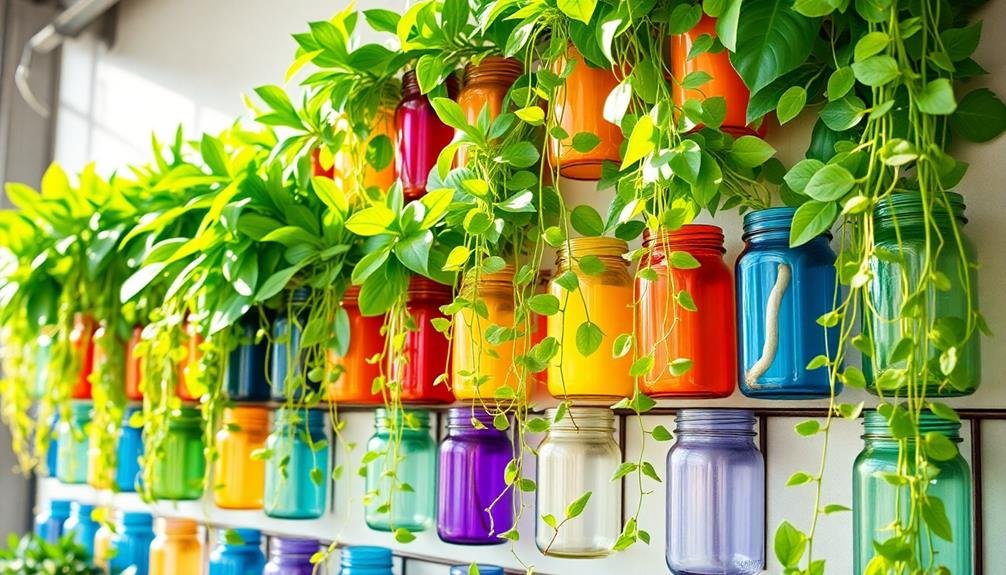
Upcycling bottles and jars not only nurtures creativity but also offers a sustainable way to enhance your plant wall. By repurposing these everyday items, you can create eye-catching displays that reflect your personality while contributing to environmental preservation.
Engaging in upcycling and repurposing old materials can lead to unique decor pieces that showcase your style. Here are three inventive ideas to get you started:
- Hanging Planters: Cut the bottoms off plastic bottles, paint them in vibrant colors, and hang them from your wall. Fill with soil and small plants, allowing them to cascade beautifully.
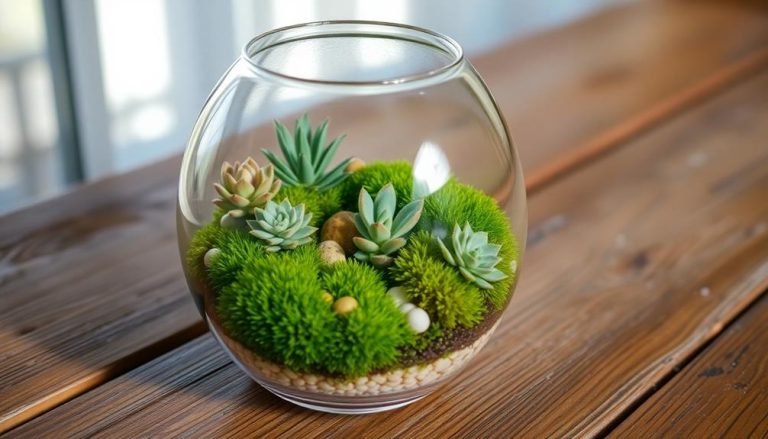
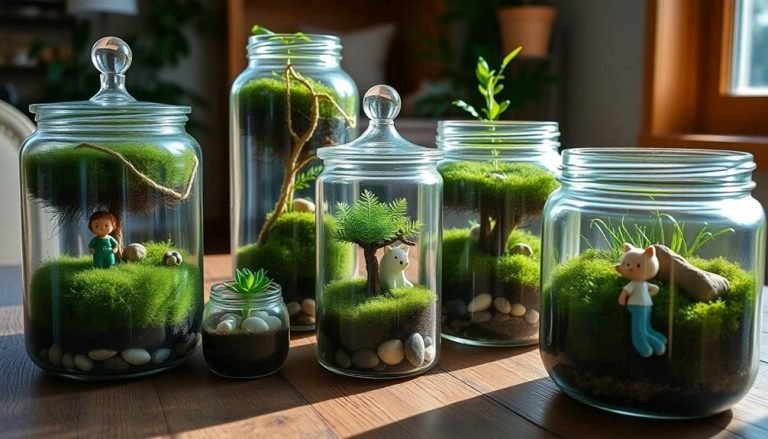
- Jar Terrariums: Utilize glass jars to create mini ecosystems. Layer pebbles, activated charcoal, potting soil, and small plants inside, sealing the jar to maintain humidity and create a stunning visual.
- Bottle Wall Art: Arrange colorful glass bottles against a backdrop, securing them with wire or string. This unique creation not only serves as a plant holder but also as a piece of art that draws the eye.
Through these projects, you'll cultivate a sense of belonging within your space, transforming ordinary materials into extraordinary displays that invite connection and creativity.
Happy upcycling!
Wire Grid Displays
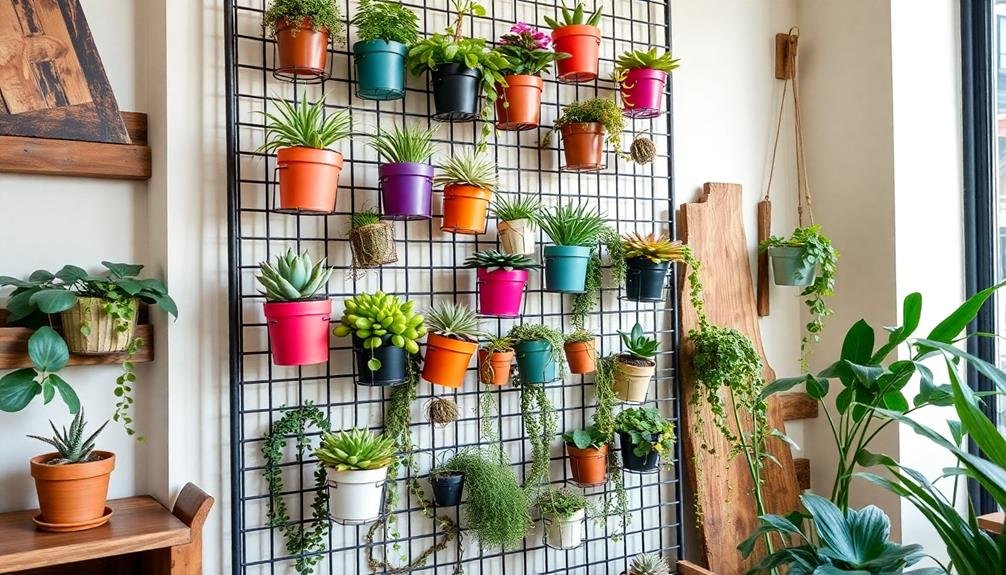
Harnessing the versatility of wire grids can elevate your plant wall to new heights. These structures not only provide a visually appealing backdrop for your green companions, but they also allow for creative arrangement and easy access. Wire grids are especially beneficial for those who appreciate the sense of community that comes from sharing gardening tips and plant care advice with friends and neighbors.
You can easily customize your wire grid display by incorporating various plant types, colors, and textures. Here's a quick reference table to guide you in selecting plants that thrive in a grid setup:
| Plant Type | Light Requirement | Water Needs |
|---|---|---|
| Succulents | Bright, indirect | Low |
| Ferns | Low to medium | Moderate |
| Pothos | Low to bright | Moderate |
| Spider Plant | Bright, indirect | Moderate |
| Herbs (Basil) | Bright | Moderate |
Wall-mounted Shelves
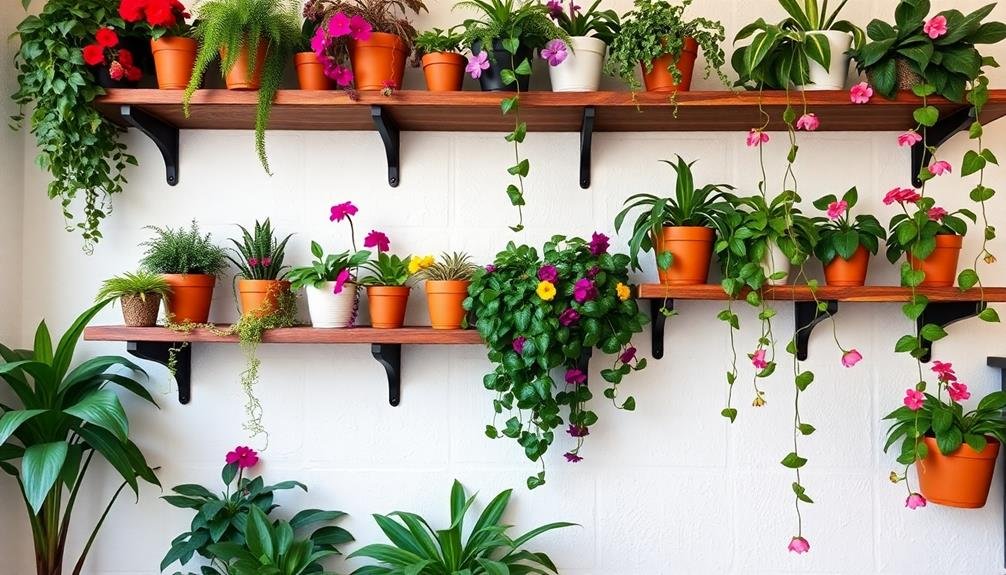
Wall-mounted shelves offer another fantastic way to showcase your plants while maximizing vertical space. By utilizing these shelves, you not only create an appealing visual display but also cultivate a sense of belonging within your living environment.
Consider the following ideas to enhance your plant wall:
- Floating Shelves: These sleek, minimalist shelves provide an unobtrusive platform for smaller plants, allowing your greenery to take center stage without overwhelming your wall space.
- Tiered Shelving Units: A tiered design creates depth and variety, enabling you to arrange plants in a staggered formation that draws the eye. This arrangement can highlight different plant sizes and shapes, adding interest.
- Reclaimed Wood Shelves: Using reclaimed wood not only contributes to sustainability but also injects rustic charm into your space. This option can be easily customized to fit any wall size and can hold a variety of plant containers.
Incorporating wall-mounted shelves into your decor not only elevates your plant display but fosters a warm, inviting atmosphere that encourages connection with nature and those who share your space.
Fabric Pocket Planters
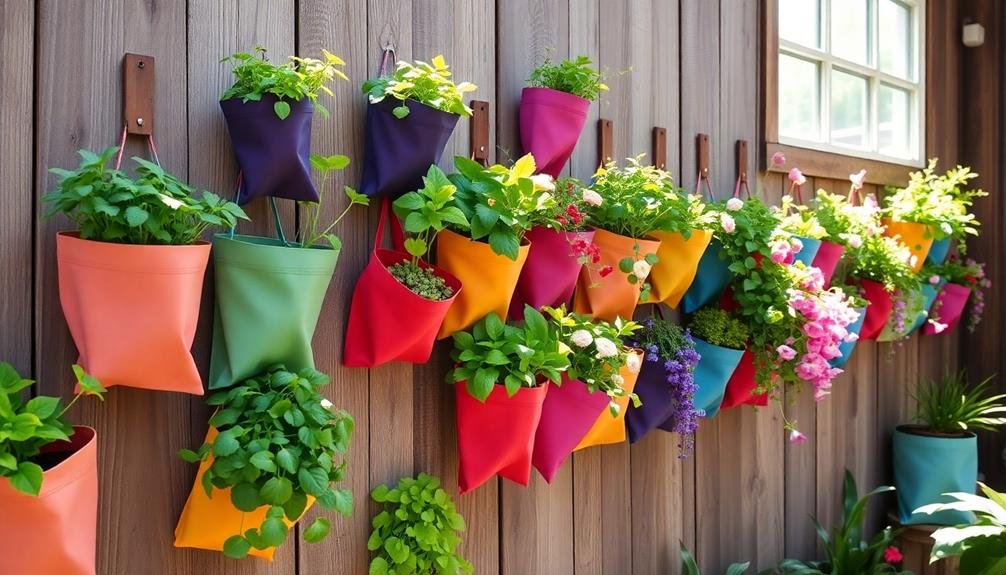
Fabric pocket planters are a fantastic way to bring greenery into your space without taking up valuable floor area. These innovative vertical gardening solutions not only maximize your wall space but also create a stunning focal point that invites nature indoors.
Constructed from durable, breathable fabric, these planters come in various designs and sizes, allowing you to customize them to suit your aesthetic preferences.
To create a lush, vibrant display, you can fill each pocket with a variety of plants—think trailing vines, colorful succulents, or even herbs for culinary use. The breathable fabric guarantees proper drainage and airflow, promoting healthy plant growth.
Additionally, you can easily hang these planters in any room, from kitchens to living areas, fostering a sense of connection with nature that enhances the overall ambiance.
For a cohesive look, consider arranging multiple fabric pocket planters in a grid or cascading pattern, which adds depth and dimension to your walls.
Don't forget to incorporate different plant heights and textures to create visual interest. By embracing fabric pocket planters, you'll cultivate a personal sanctuary that reflects your unique style while nurturing your love for plants.
Frequently Asked Questions
How Do I Choose the Right Plants for a Wall Garden?
When choosing plants for your wall garden, consider your space's light and humidity. Opt for hardy, low-maintenance varieties that fit your style and preferences, ensuring you create a vibrant, welcoming atmosphere that feels like home.
Can I Create a Plant Wall in a Small Apartment?
Absolutely, you can create a plant wall in your small apartment! Choose vertical space wisely, select compact plants, and use creative containers. It'll add life and a personal touch to your cozy space. Enjoy!
What Tools Do I Need for Building a Plant Wall?
To build a plant wall, you'll need basic tools like a drill, screws, a level, and potting supplies. Don't forget to gather your favorite plants and plan your layout for a vibrant display!
How Do I Maintain a Plant Wall Year-Round?
Maintaining a plant wall year-round isn't as hard as you think. Just water regularly, check for pests, and provide adequate light. You'll feel proud watching it thrive, creating a vibrant space for everyone to enjoy.
Are There Any Indoor Plant Wall Options for Low Light?
Sure, you can definitely create an indoor plant wall for low light! Consider using plants like pothos or snake plants. They thrive in dim spaces, adding life to your area without requiring too much sunlight.
Whats Next
Transforming your space with a plant wall isn't just an aesthetic choice; it's a way to breathe life into your environment, inviting nature indoors while showcasing your creativity. Whether you opt for the rustic charm of repurposed wooden pallets or the modern appeal of hanging planter systems, each idea offers a unique opportunity to express yourself. By thoughtfully curating your green oasis, you can cultivate a serene retreat that not only beautifies your surroundings but also nurtures your well-being.