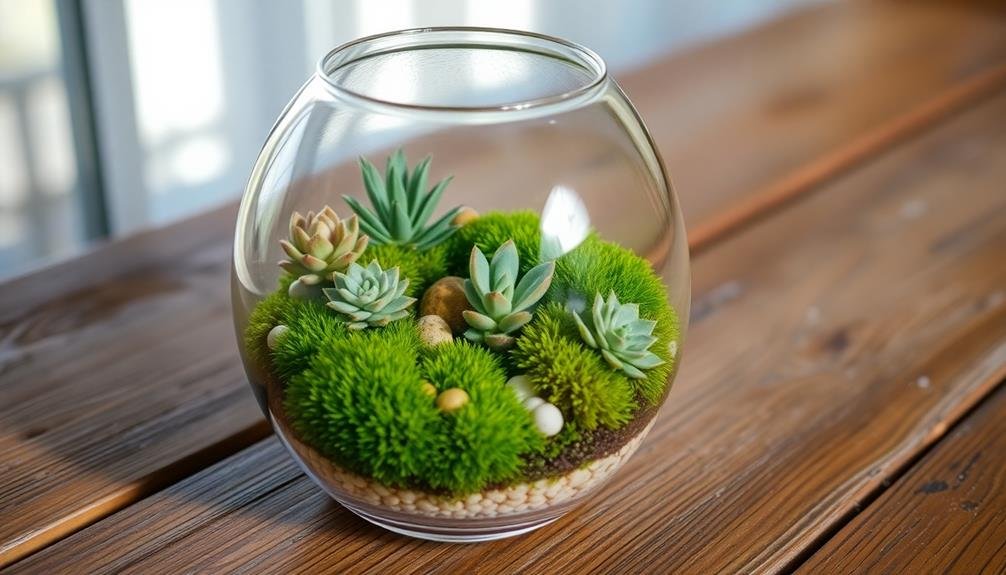
If you're looking to create a vibrant indoor garden without breaking the bank, starting a budget-friendly terrarium is a practical choice. You'll want to pick the right container, so it's accessible and appealing. Next, consider the plants that will thrive in your mini ecosystem, as not all are created equal regarding care and cost. But before you rush into the project, understanding the essentials of soil and decor can make all the difference in your terrarium's success. Ready to explore the best options for your setup?
Key Elements
- Choose an appropriate container, like glass for visibility or ceramic for aesthetics, with drainage holes to prevent overwatering.
- Select affordable plants such as pothos, spider plants, or succulents that thrive with minimal care.
- Use budget-friendly soil alternatives like potting soil, coconut coir, or perlite for a healthy growing environment.
- Incorporate natural decor elements like rocks, driftwood, and moss to enhance the terrarium's aesthetic and moisture retention.
- Maintain your terrarium with regular watering, pruning, and cleaning to ensure longevity and vibrant plant health.
Choosing the Right Container
When it comes to choosing the right container for your terrarium, the options are nearly endless. You might find yourself drawn to glass containers, which allow light to permeate and create a vibrant environment for your plants, or perhaps prefer ceramic vessels that offer a more rustic aesthetic.
If you're contemplating a closed terrarium, look for a container with a wide mouth, as this will facilitate plant maintenance while enhancing air circulation. On the other hand, open containers work well for succulents, as they thrive in drier conditions.
Additionally, think about the size and shape of your chosen container. A larger container can accommodate multiple plants, allowing you to create a lush, layered landscape, while smaller containers provide a more intimate setting, perfect for a single plant or a small grouping.
Don't forget to take into account drainage; containers with holes at the bottom can prevent overwatering, ensuring your plants flourish.
Affordable Plant Options
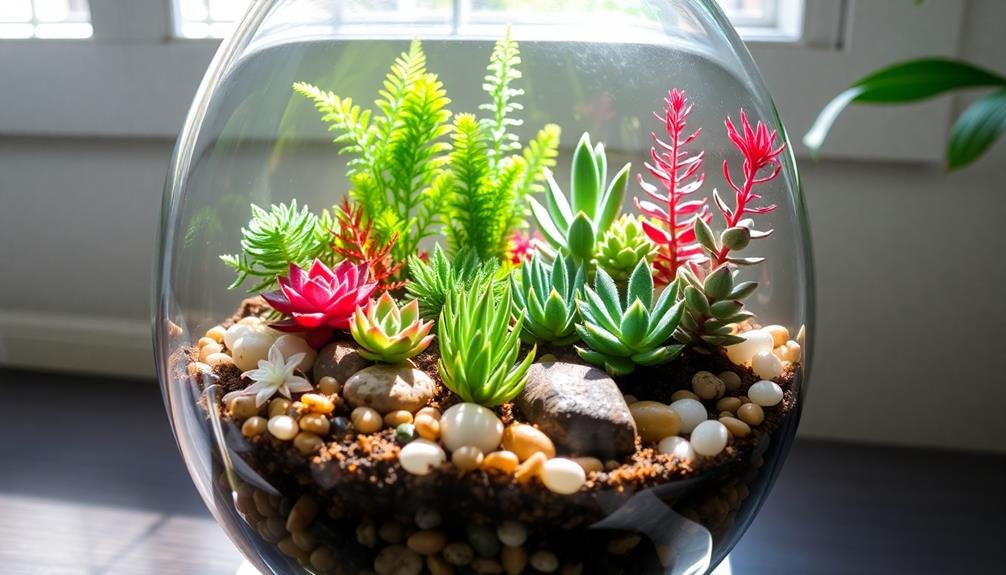
Finding affordable plant options for your terrarium doesn't have to be a challenging task.
With a little research and creativity, you can discover several budget-friendly plants that thrive in confined spaces, adding life and vibrancy to your miniature ecosystem.
Incorporating plants like these not only enhances your terrarium but also promotes a sustainable approach to decor through upcycling and repurposing.
Here are some excellent options to evaluate for your terrarium:
- Pothos: This hardy vine tolerates low light and irregular watering, making it perfect for beginners.
- Spider Plant: Known for its arching leaves and baby "spiders," this plant is resilient and can adapt well to various conditions.
- Ferns: Varieties like the Boston fern or maidenhair fern add a lush, soft texture and thrive in humidity, which is ideal for terrariums.
- Succulents: Small types, such as Echeveria or Haworthia, require minimal care and can bring a unique aesthetic to your setup.
Budget-Friendly Soil Alternatives
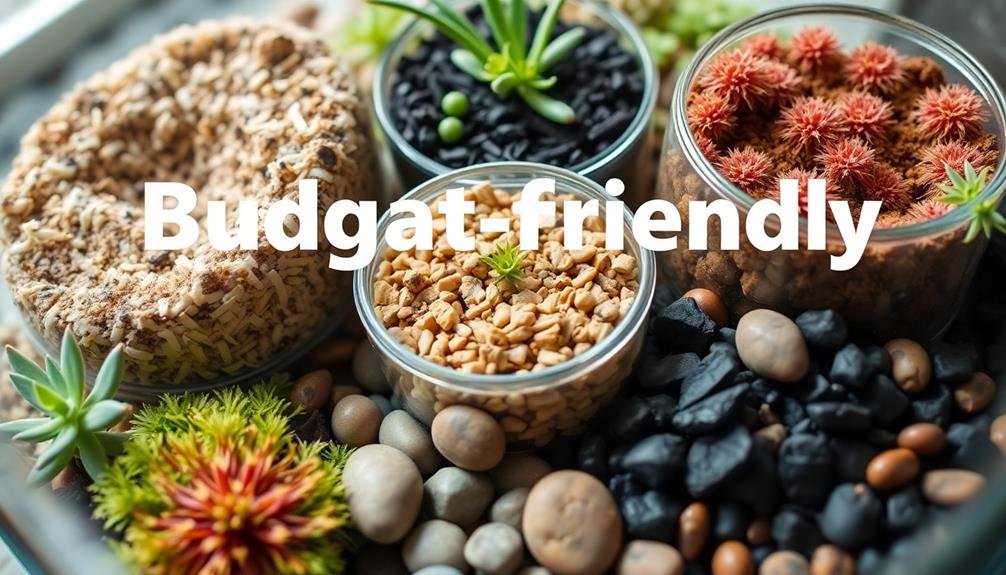
Creating the perfect environment for your terrarium doesn't have to break the bank, especially when it comes to soil. You can explore several budget-friendly alternatives that provide both functionality and nourishment for your plants. For instance, consider using a combination of potting soil, coconut coir, and perlite. Each of these options not only contributes to a healthy terrarium ecosystem but also keeps costs low.
Here's a quick comparison of some budget-friendly soil alternatives:
| Soil Alternative | Benefits | Cost-Effectiveness |
|---|---|---|
| Potting Soil | Readily available, rich in nutrients | Affordable, around $5 per bag |
| Coconut Coir | Eco-friendly, excellent moisture retention | About $7 per brick |
| Perlite | Improves drainage and aeration | Inexpensive, around $4 for a bag |
Incorporating Natural Decor Elements
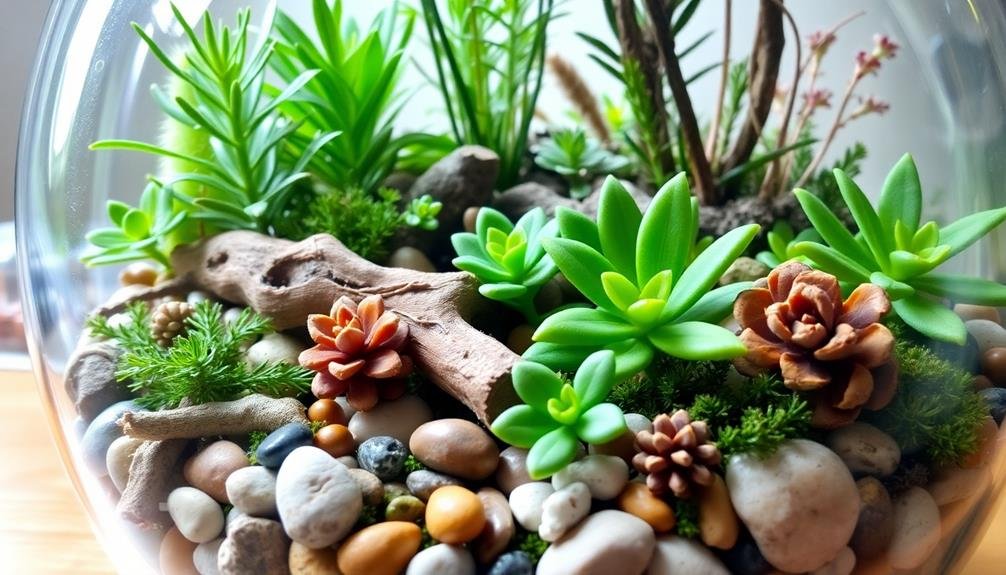
Incorporating natural decor elements into your terrarium elevates its aesthetic while enhancing the overall environment for your plants.
By thoughtfully selecting decor, you create a harmonious space that reflects your personal style and fosters a sense of belonging in your living space.
Here are four elements to contemplate:
1. Rocks and Pebbles: Use a variety of sizes, colors, and textures to create visual interest.
Larger stones can serve as focal points, while smaller pebbles can create paths or ground cover.
2. Driftwood and Twigs: Incorporate interesting shapes and textures by adding driftwood or twigs.
They can create natural looking structures, adding height and depth to your terrarium.
3. Moss: This lush green element not only enhances the aesthetic appeal but also helps retain moisture in the soil, benefiting your plants.
4. Small Figurines or Natural Elements: Contemplate adding tiny animal figurines or shells to create a whimsical touch that invites curiosity and adds personality to your terrarium.
Maintenance Tips for Longevity
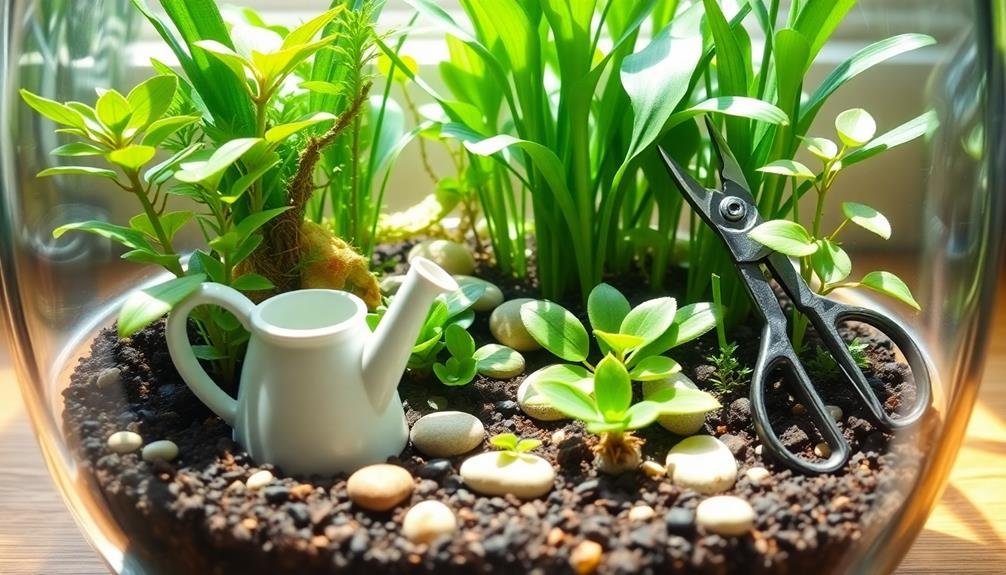
Maintaining a terrarium isn't just about keeping it visually appealing; it's vital for the health and longevity of your plants. Regular maintenance guarantees that your mini ecosystem thrives, providing you with a sense of accomplishment and connection to nature.
To help you with the upkeep, consider the following tips:
| Task | Frequency |
|---|---|
| Watering | Every 2-4 weeks |
| Pruning | Monthly |
| Cleaning glass | Bi-weekly |
| Fertilizing | Every 3 months |
| Checking drainage | Monthly |
Water your plants appropriately, guaranteeing the soil remains moist but not soggy. Overwatering can lead to root rot, while underwatering might stress your plants. Pruning helps maintain their shape and encourages healthy growth. Regularly clean the glass to enhance sunlight penetration and keep it looking fresh. Fertilizing, though not always necessary, can boost growth if your plants appear sluggish. Finally, frequently check the drainage to prevent water from accumulating at the base.
Frequently Asked Questions
Can I Use Plastic Containers for My Terrarium?
Absolutely, you can use plastic containers for your terrarium! They're lightweight, affordable, and available in various shapes. Just make sure they have proper drainage to keep your plants healthy and thriving. Enjoy creating your unique space!
How Much Sunlight Do Terrarium Plants Need?
Just like a warm hug, terrarium plants thrive in bright, indirect sunlight. They need about 6-8 hours daily to flourish. Too much direct sun can scorch them, so find that perfect cozy spot for them!
What Tools Do I Need to Start a Terrarium?
To start your terrarium, you'll need a glass container, small rocks for drainage, activated charcoal, potting soil, and plants. Don't forget tools like tweezers and a small shovel to help you create your mini ecosystem!
How Often Should I Water My Terrarium?
You should water your terrarium every two to four weeks, depending on the plants and humidity. Check the soil moisture; if it feels dry, give it a light watering. Your plants will thrive with care!
Can I Create a Closed Terrarium Indoors?
Yes, you can absolutely create a closed terrarium indoors! Just choose a glass container, add plants, and guarantee it has good drainage. You'll enjoy a mini ecosystem that thrives beautifully in your space.
Whats Next
In summary, starting your budget-friendly terrarium journey doesn't have to break the bank; with just a few thoughtful choices, you can create a thriving miniature ecosystem. As you gather your container, select resilient plants, and incorporate natural decor, remember that every step you take is building a lasting connection with nature. Ultimately, with consistent maintenance, you'll find that nurturing your terrarium is not just a hobby, but a rewarding experience you won't want to miss.